The Business Networking Dilemma
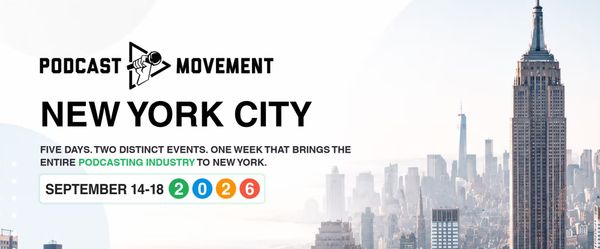
I'm going to a conference at the beginning of September and the idea of a physical business cards for the event are intriguing to me, but are they needed? Can I get away with a digital option? Here are my thoughts.


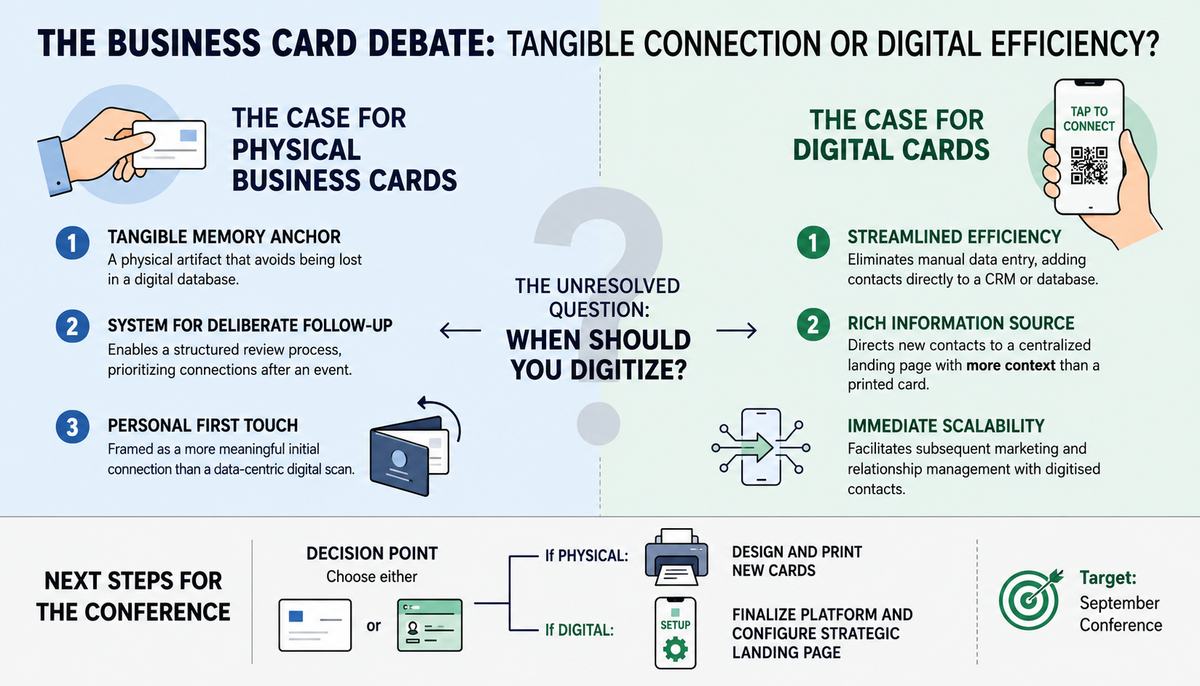
In the lead-up to a major conference, many professionals face a modern networking crisis: do you print a fresh stack of traditional business cards, or do you embrace the digital-first era of tap-to-connect tools? It is a debate between the tactile, memorable nature of physical artifacts and the streamlined efficiency of our digital databases.
The Case for the Physical Business Card
There is an undeniable psychological weight to a physical business card. In an age where we are constantly bombarded by digital notifications, a physical card acts as a tangible memory anchor. When you hand someone a card, you are exchanging an object, not just a data packet.
Pros:
- Memorability: Unlike a digital contact that gets "thrown into your phone and forgotten about," a physical card is a distinct artifact. It serves as a visual and tactile reminder of a specific conversation.
- Deliberate Follow-up: Physical cards encourage a more intentional workflow. Many professionals still use "business card books"—similar to collecting baseball cards—which allows for a manual, thoughtful review of connections. It turns networking into a curated process rather than a passive data dump.
- Personal Touch: The exchange of a physical object feels inherently more human and less transactional than a quick QR code scan.
Cons:
- Data Friction: The primary drawback is the manual labor required to move that information into a CRM or spreadsheet. Without a digitization step, the card remains an isolated piece of paper.
- Limited Information: A card can only hold so much text, whereas a digital link can direct a contact to a rich, dynamic landing page.
The Case for the Digital Card
On the other side of the aisle, companies like Popl and mTap (and tons of other companies) are championing a future where the business card is obsolete. They argue that the first step of networking should be immediate, scalable, and data-centric. I don't necessarily disagree, but...
Pros:
- Efficiency: Digital cards eliminate the "middleman" of manual data entry. A tap or a scan can, when setup properly, instantly populates a database, ensuring that no contact is lost in the shuffle.
- Scalability: Digital tools are built for the modern marketing funnel. They allow you to immediately "grok" your new contacts, enabling faster follow-up, better segmentation, and more effective relationship management.
- Dynamic Content: A digital card can be updated in real-time, ensuring your contact always has your most current information, portfolio, or social links.
Cons:
- The "Crap in a Database" Problem: The ease of digital collection can lead to a cluttered database where contacts are stored but not truly engaged with. It lacks the "Rolodex" feel that forces you to look at who you know and how you can help them.
- Transactional Feel: The speed of a digital tap can sometimes strip the nuance out of an initial meeting, making the connection feel more like a data transfer than a relationship-building moment.
Finding the Balance
The ultimate solution may not be choosing one over the other, but rather defining the first step. Maybe the best strategy is a hybrid approach: use a digital tap to ensure the data is captured instantly, but pair it with a memorable, personal interaction that ensures the connection is more than just another entry in a spreadsheet. For example, you talk with the other person first and then share you digital business card. What a thought! 🤯
Another idea is to have your physical business card feature a QR code that has your digital information embedded so when scanned it can be entered into the person's device of choice digitally after the fact.
Whether you print the cards or go digital, the goal remains the same: to turn a fleeting conference encounter into a lasting professional relationship.
What do you do? Post your thoughts in the comments!
— Seth Goldstein
An additional thought from Seth: I wonder what business people in Japan do. They really value the business card. Time to do some more research:
"In Japan, business cards, known as meishi, are a vital part of professional etiquette and are treated with great respect. The exchange of meishi is a formal ritual that signifies respect, hierarchy, and the intention to build lasting business relationships." (Source)
The Latest From The Entrepreneur's Enigma Podcast


Sponsor

Looking for guests? Want to be on podcasts? Check out Podmatch! I use it for both getting on podcasts and finding quality guests. It's well worth it and affordable too!
Web Jawn
Curated by Seth Goldstein
 Ivan Mehta
Good grief. Not a huge fan of Bending Spoons and what they do with companies they acquire.
 Lawrence Abrams
Skynet coming in hot?
 Roger Montti
Updates always break things, but sometimes these updates are worth the immediate headaches.
 Nate Anderson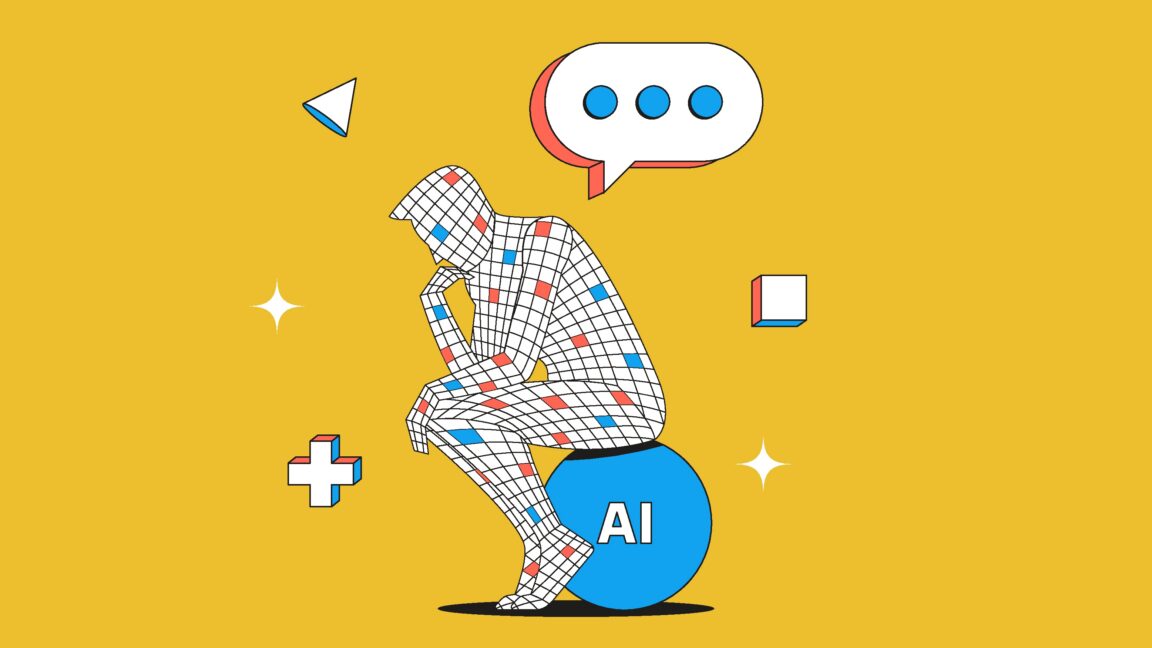
Interesting.
 Emma Roth
Someone is getting paid off, IMHO. Double standard? Yep!
 Ryan Whitwam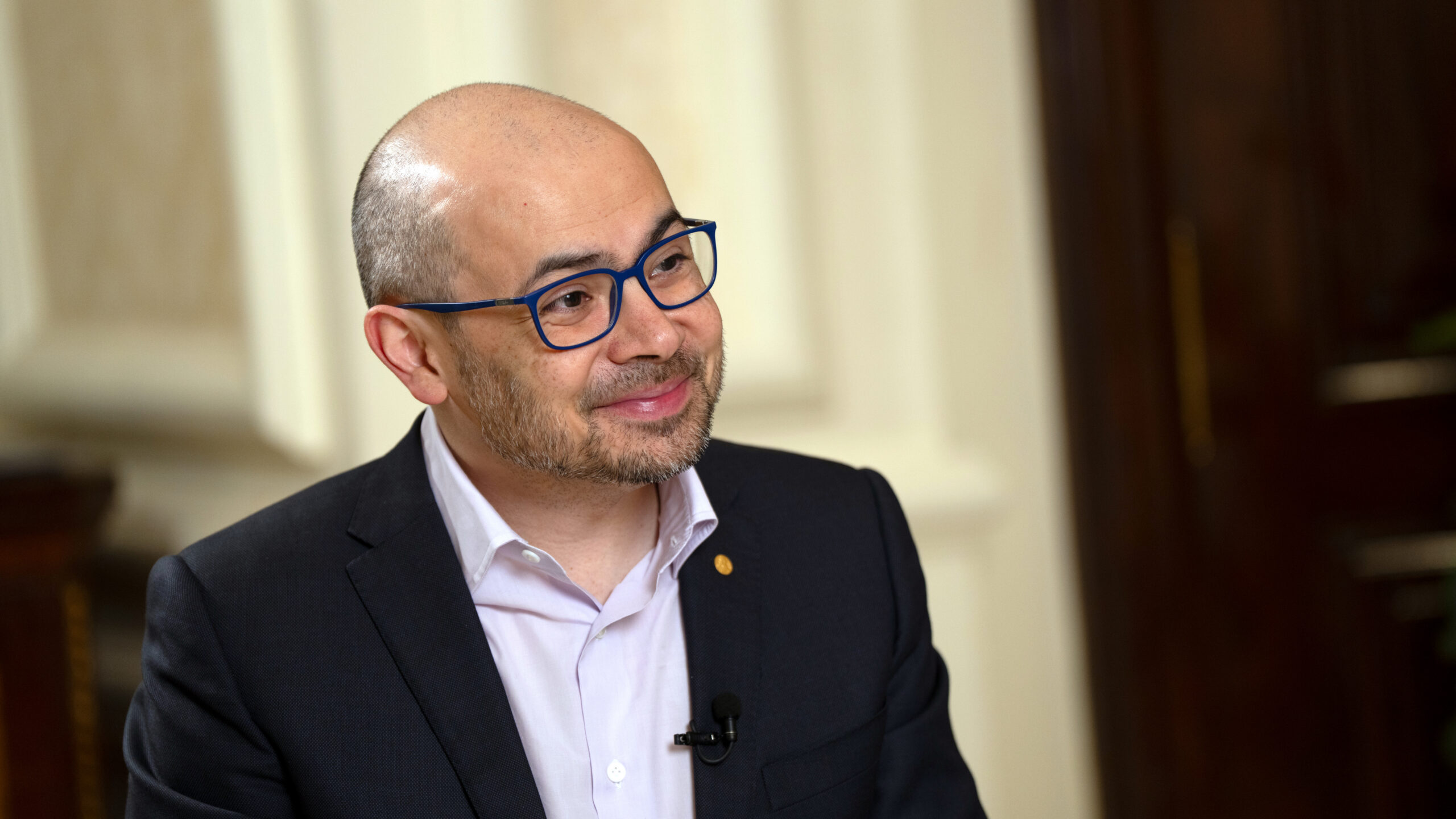
Shake up at The Goog!
 Laurent Giret
Goodie, another brick to talk to! So innovative, guys! 🤪
 Scharon Harding
Ooh a smart speaker with moving parts! 🤪
 Seth C. Lewis
Not a good look USA Today! Not a good look at all!
 Fernanda González
This sounds like a novel idea. I know there's a reason to do this, but still seems a bit counterintuitive.
 Tim De Chant
Because that makes sense. 😒😠🤬
 The Repository
WordPress has been busy plugging bugs.
 Sarah Perez
So Cloudflare hates AI, but now they are making a browser for AI. 🤔
 Anna Washenko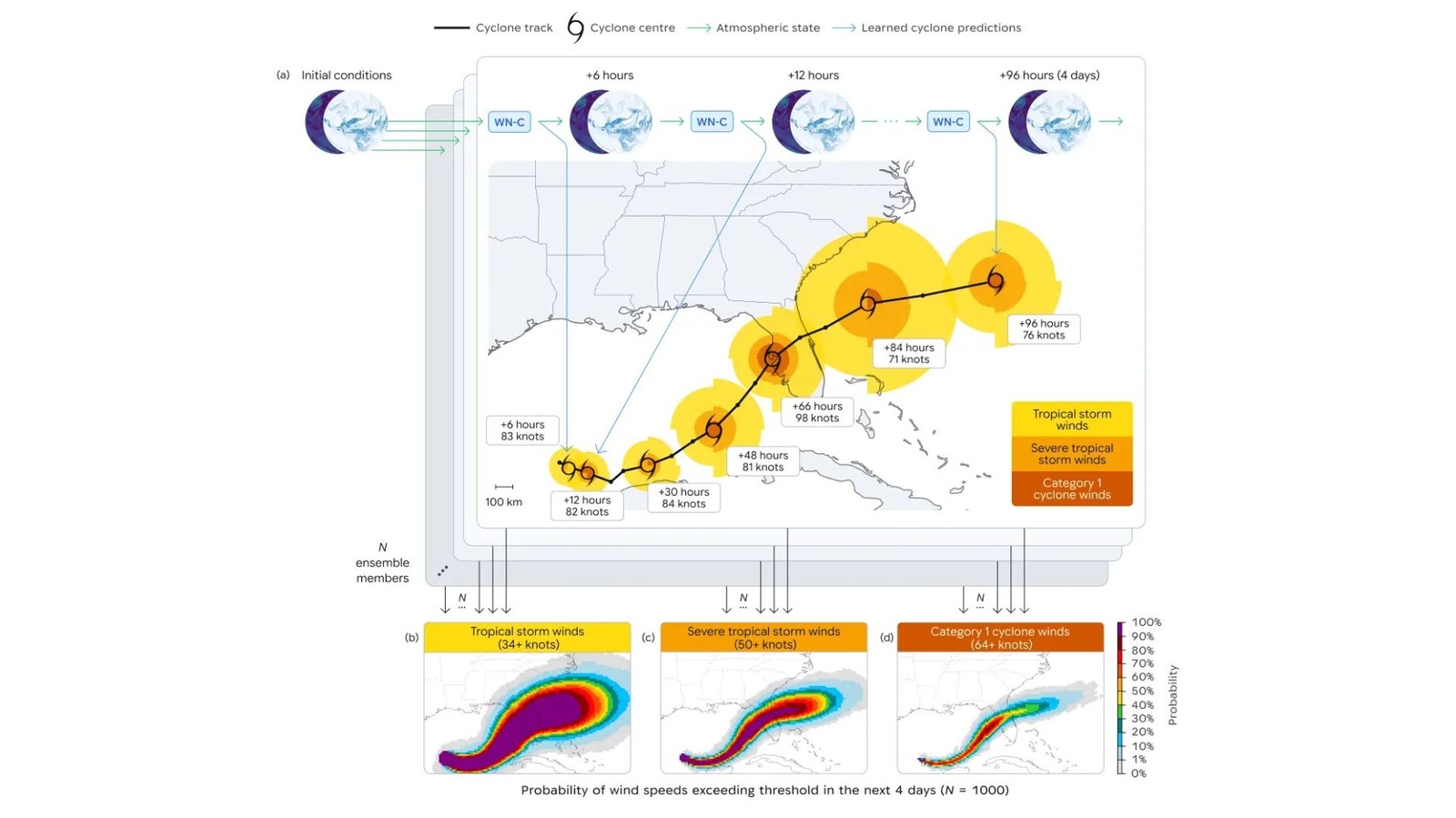
Good AI news.
 Ivan Mehta
Meta is pure evil!
 Reuters
Oof! 😒🤪
 Lily Hay Newman
Great! Fan-f*cking-tastic. Way to not pay attention guys! 😒🤬
 Sophie Austin
Good. Will it be enforced? Probably not.
 Emma Roth
This whole "detector" thing is not a new phenomenon.
 Hayden Field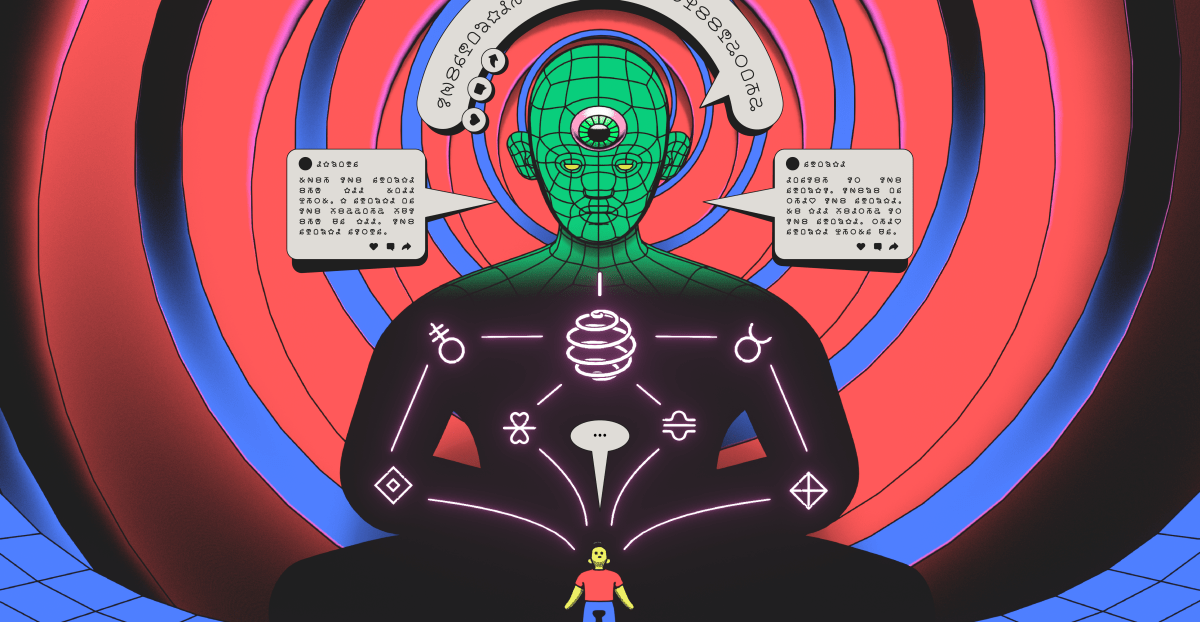
I'm not surprised that humans are flocking to another "religion." Remember cults are a thing.
Sponsor

Plaud, the world’s No.1 AI note-taking brand, exists to help people capture, extract, and utilize what you say, hear, see, and think. And you know something? It works. It actually understands my marble-mouth talking. Impressive. 😁
Web Finds & Funnies
Curated by Brian Griffiths
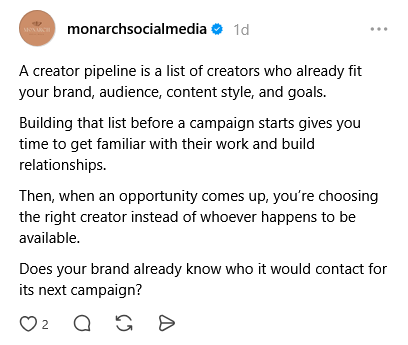
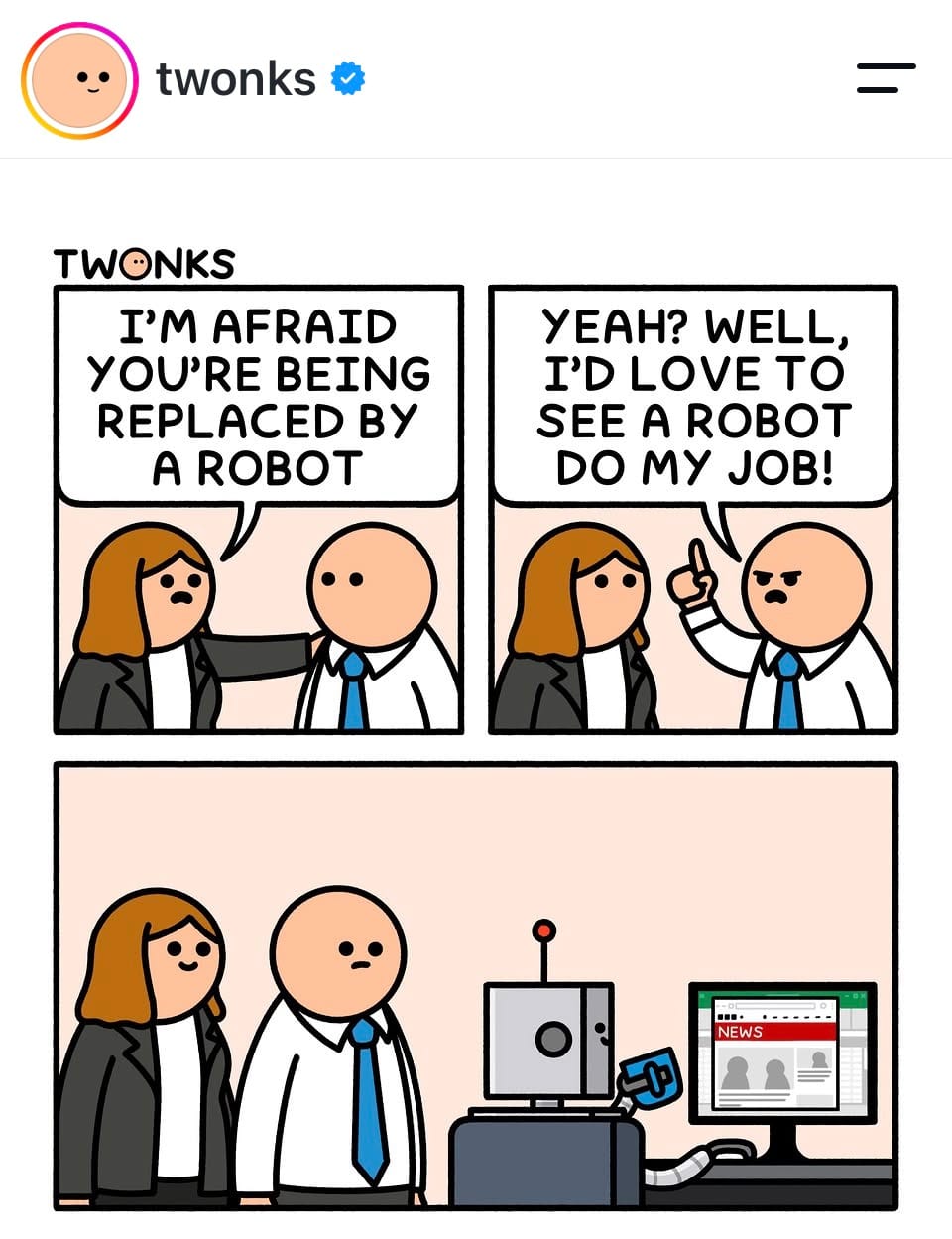
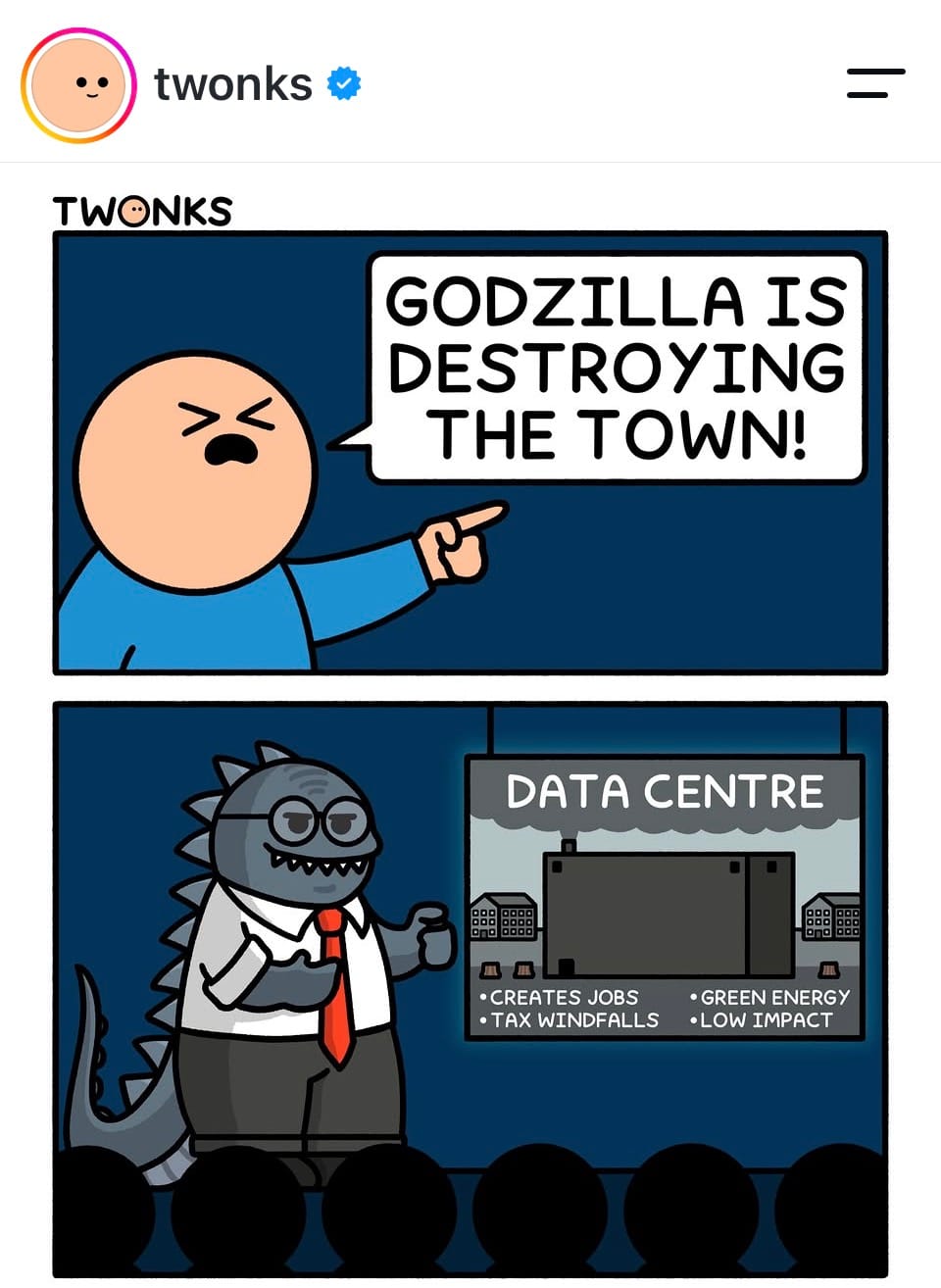

That's It For This Week! Keep Rocking It!
-Seth + Brian
Thanks for reading! If you're liking the newsletter and the content that I curate, please consider signing up for a pay-what-you-want subscription to help me continue to write this weekly newsletter.